
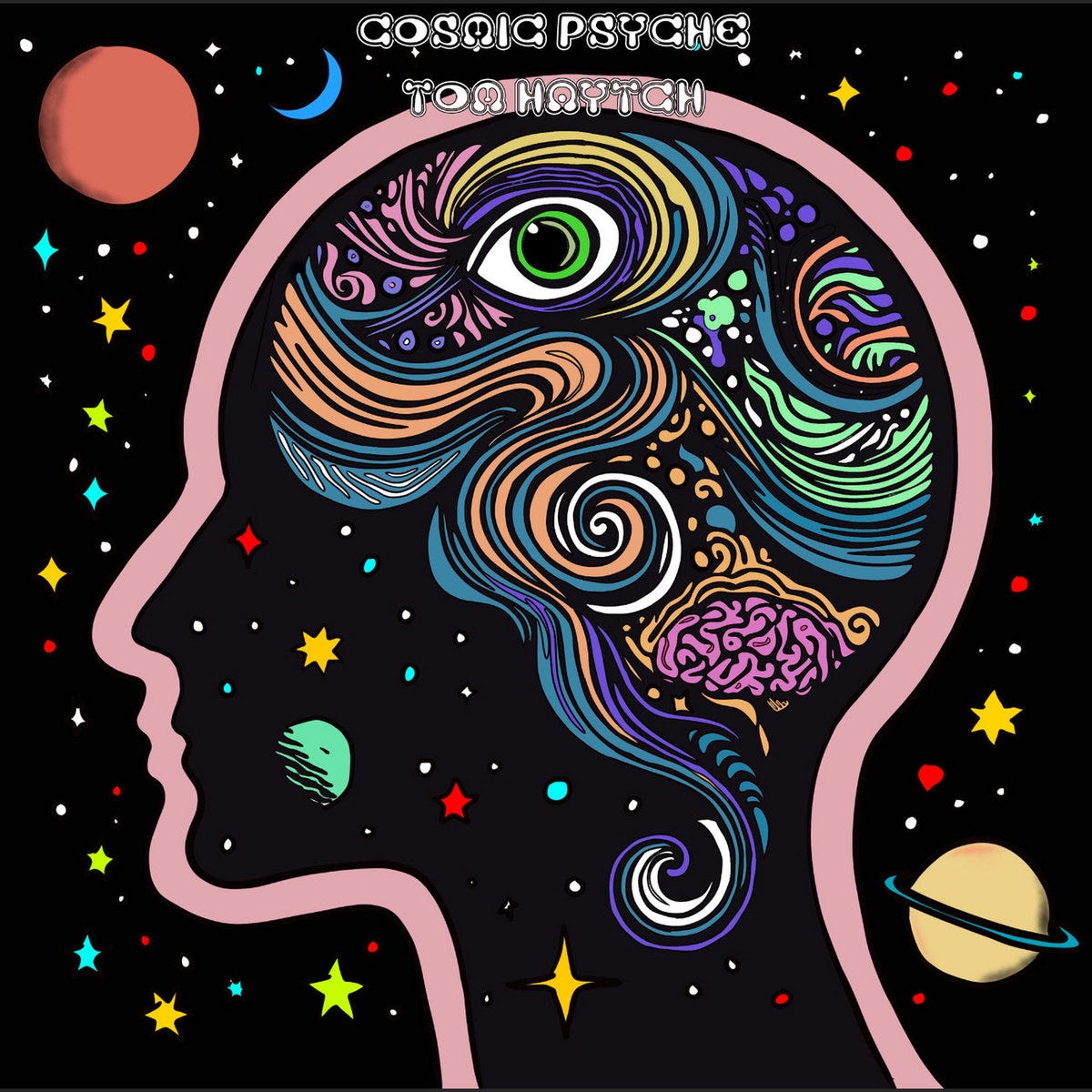
Cosmic Psyche by Tom Haytch
Psychedelic prog as an act of self-liberation

In a world where some accuse the internet’s algorithms of pushing users down pathways to become a collective hivemind, England-based Tom Haytch’s Cosmic Psyche illustrates the importance of individuality.
The six-track EP is the first installment in a four-part concept that progresses through different stages of awakening into a new consciousness by separating yourself from societal conditioning and becoming your true self.
This first EP covers the beginnings of searching for genuine individuality, as well as themes of “rebirth, unlearning, and inner transformation.” These may be lofty ideas, but Haytch explores them wholeheartedly and earnestly through his compositions and individualistic DIY approach to creating music.
It’s worth noting that the concept of finding oneself is difficult to express because so much of the journey is hard to visualize. It’s most likely why Haytch may have made the EP completely instrumental. Each piece features developing layers of synths that often seem to represent layers of societal conditioning and preconceived notions that the guitar, bass, and drums must break through to cement a more individualistic ideal.
“Tabula Rasa” sets the stage for this, as introspective synth tones introduce a stately groove and UFO sounds. It’s an intriguing motif for the opening track that gives listeners the sense that they are opening to something deeper, if they are willing to journey inward.
The EP’s second track, “OfNoHerd,” is a fantastic way to coerce those who might still be reticent to the call to go deeper, as it introduces a driving modal guitar riff accompanied by keyboard grooves. Occasionally, these Rush-adjacent guitar parts unexpectedly alternate with ‘70s funky lines, making the track an enveloping listen.
Additionally, the two tracks separately introduce the two warring ideals represented through different instruments that Haytch wishes to explore in his release. The synths, which are prominent on “Tabula Rasa,” represent societal conditioning, whereas the guitar/bass —highlighted on “OfNoHerd”— represent individuality.
In “Opus Umbrae,” listeners will begin to hear signs of the inherent struggle to shrug off societal conditioning. In a song that wouldn’t be out of place in a soundtrack to a Quentin Tarantino-directed film, Haytch’s synths create a plethora of sounds, quoting several of the ‘70s prog greats and stunning albums, from Rush’s spacey sounds on 2112 to Pink Floyd’s grooving keyboards on Wish You Were Here to even Yes’s organs on Going for the One. Throughout the track, guitars weave and wind, often trying to break through the layers of synth.
These warring aspects continue to develop on the following track: “Through Unlearning, We Discover Ourselves.” Here, a multitude of layered synths hiss and wail, as bass grooves a syncopated rhythm while guitar teases out a simplistic line. Again, though the individualistic bass and guitar attempt to break through societal synth textures, the composition illustrates how difficult this is to do in practice.
When listeners finally reach “Individuality,” the EP’s standout track, they may recognize how wildly psychedelic and intense the track is. Here, synths build on top of each other before being torn asunder by lead guitar and syncopated bass tones.
Halfway through, a stunning guitar solo twists around, reflecting a spiral staircase down to the furthest reaches of the subconscious. Pounding bass drums and toms played by Johnathan Case — the only instrument Hatych doesn’t play on the EP — hold the piece back from disappearing into an abyss. In the last minute, the song shifts into a punk-esque expression and rhythm, perhaps to illustrate the self choosing individualism over society.
The last track, “Cosmic Psyche,” begins with a swirl of synths coming from every direction, flanging around before guitar and bass cut through again. This time, they team up, but it isn’t until the drums come in that they can cut through completely.
From here, the guitar is at its most free and expressive, illustrating the freeing nature of favoring self-expression over being told who to be and what to do. Despite this freedom, synths come back at the end of the piece, wavering in and out, illustrating that although you can shed these notions, they still exist and will attempt to permeate your resolve.
Overall, Haytch’s Cosmic Psyche is an impressive sign of things to come. His second announced installment of the series, “Catharsis,” has no specific release date yet, but after listening to this debut EP, you’ll most likely want to follow Haytch and his work.
Blending prog concepts and shout-outs to ‘70s rock heroes while distinguishing himself psychedelically and compositionally, the artist is truly putting out intriguing individualistic ideas in a world of algorithms and groupthink.
This review was written by Bill Cooper, who writes about music, film, books, and pop culture in various internet corners like Spectrum Culture. His two greatest urges, discovering new music and writing, keep him up at night and going during the day. The extensive amount of coffee he drinks may also contribute.
You can follow Bill Cooper on Bluesky and his Substack, Bill’s Takes.
 | A guest post by
|